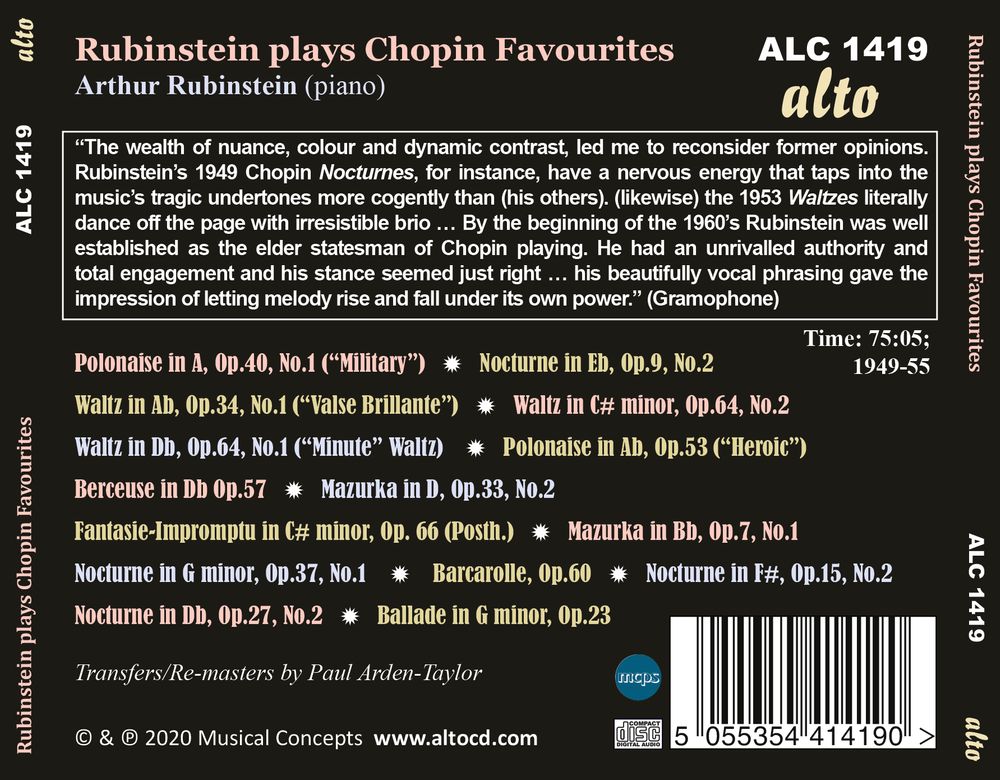
Description
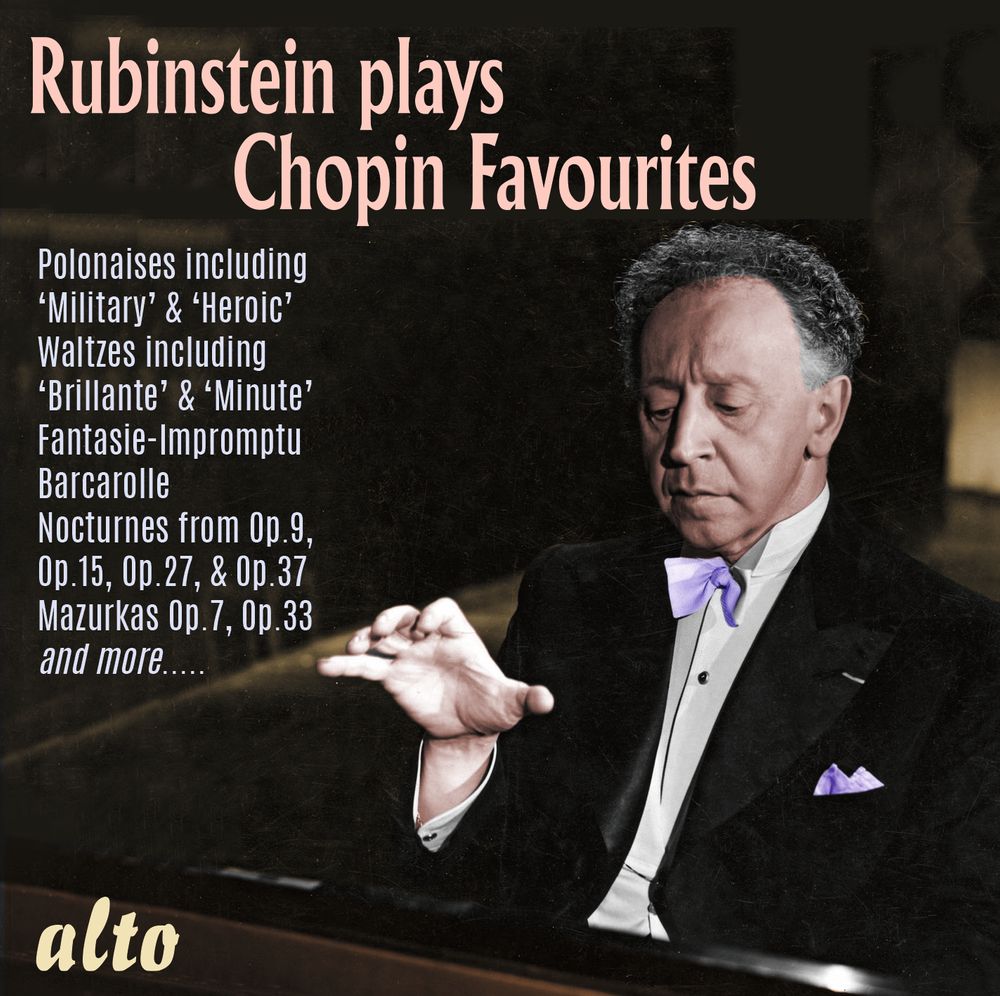
“The wealth of nuance, colour and dynamic contrast, led me to reconsider former opinions. Rubinstein’s 1949 Chopin Nocturnes, for instance, have a nervous energy that taps into the music’s tragic undertones more cogently than (his others). (likewise) the 1953 Waltzes literally dance off the page with irresistible brio … By the beginning of the 1960’s Rubinstein was well established as the elder statesman of Chopin playing. He had an unrivalled authority and total engagement and his stance seemed just right … his beautifully vocal phrasing gave the impression of letting melody rise and fall under its own power.” (Gramophone)
| 1. Polonaise in A, Op.40, No.1 (“Military”) 5:29 |
| 2. Nocturne in Eb, Op.9, No.2 4:11 |
| 3. Waltz in Ab, Op.34, No.1 (“Valse Brillante”) 4:28 |
| 4. Waltz in C# minor, Op.64, No.2 3:45 |
| 5. Waltz in Db, Op.64, No.1 (“Minute” Waltz) 1:42 |
| 6. Polonaise in Ab, Op.53 (“Heroic”) 6:43 |
| 7. Berceuse in Db Op.57 4:36 |
| 8. Mazurka in D, Op.33, No.2 2:25 |
| 9. Fantasie-Impromptu in C# minor, Op. 66 (Posth.) 5:15 |
| 10. Mazurka in Bb, Op.7, No.1 2:12 |
| 11. Nocturne in G minor, Op.37, No.1 5:27 |
| 12. Barcarolle, Op.60 9:28 |
| 13. Nocturne in F#, Op.15, No.2 3:33 |
| 14. Nocturne in Db, Op.27, No.2 5:12 |
| 15. Ballade in G minor, Op.23 9:20 |